Supreme Court Order on Misuse of Residential Properties: Bengaluru Already Acting, But Next Phase Likely
The ongoing enforcement actions across Indian cities originate from the Supreme Court proceedings in Loganathan vs State of Tamil Nadu & Ors. (Diary No. 17103/2026 in SLP(C) 8044–8045/2025).
The ongoing enforcement actions across Indian cities originate from the Supreme Court proceedings in Loganathan vs State of Tamil Nadu & Ors. (Diary No. 17103/2026 in SLP(C) 8044–8045/2025). In its order dated 25.03.2026, the Court took serious note of unauthorised constructions and the growing trend of using residential properties for commercial purposes, observing that such violations reflect systemic lapses within municipal administration.
Importantly, the Court has now expanded the issue beyond a single case and directed all Municipal Corporations in capital cities to:
- Conduct a comprehensive inquiry across their jurisdictions
- Identify residential areas being misused for non-residential purposes
- Cover all colonies, apartments, layouts, and even peripheral ‘island’ areas
- File affidavits personally affirmed by Commissioners
How other cities have responded
Following these directions, cities have begun structured compliance:
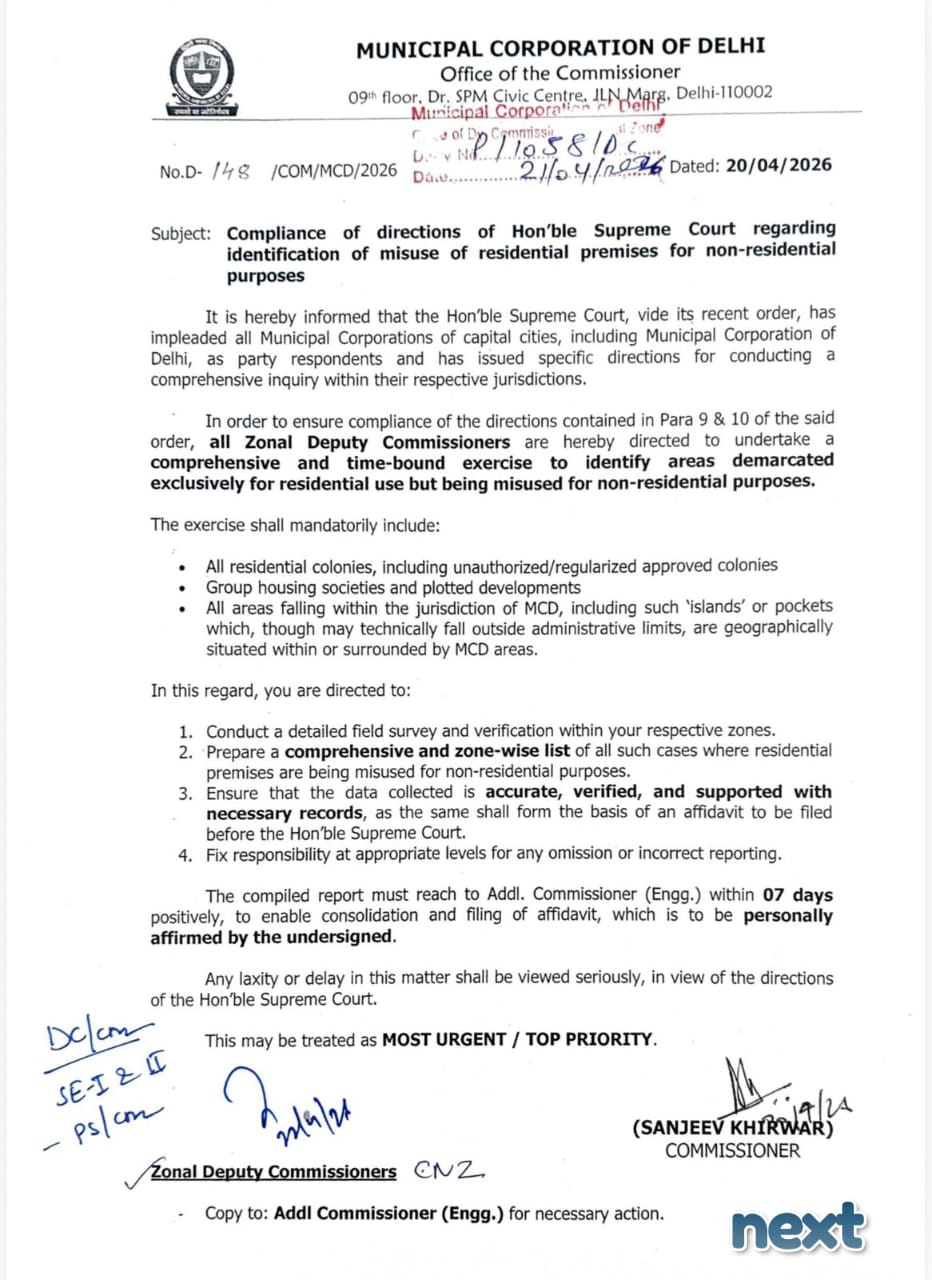
- Delhi (MCD) has issued internal orders mandating a time-bound, zone-wise survey, with officers directed to submit verified data within strict timelines for affidavit filing.
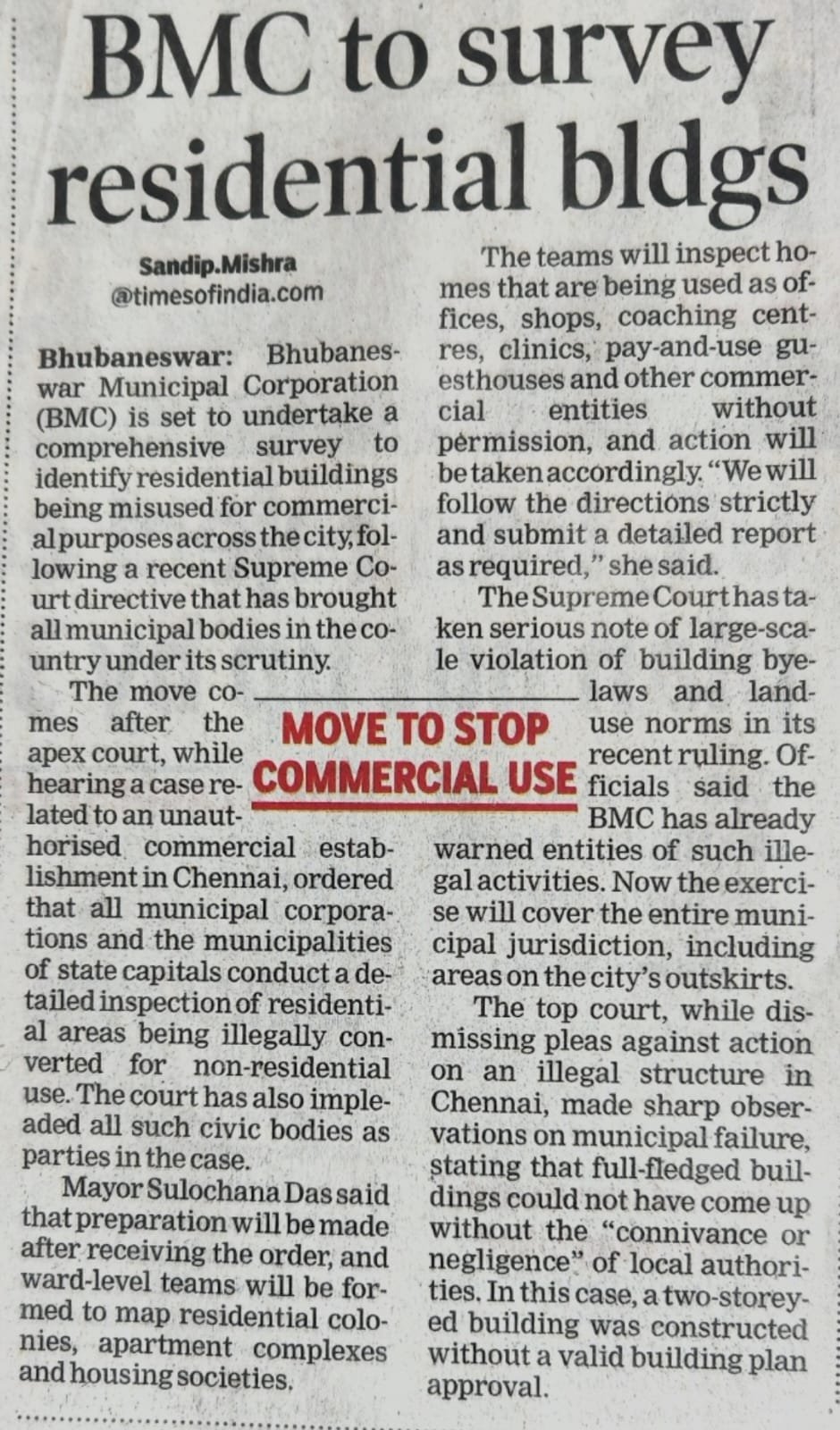
- Bhubaneswar (BMC) has initiated ward-level inspections, targeting houses used as offices, clinics, coaching centres and similar establishments, with enforcement action to follow.
These responses show a clear shift towards centralised, documented, and court-monitored compliance.
Bengaluru’s position: Already in action
Unlike these fresh survey-based approaches, Bengaluru has already been addressing illegal constructions and misuse through ongoing enforcement mechanisms, including:
- Crackdowns on unauthorised constructions and building deviations
- Action against commercial activities in residential premises without trade licences
- Property tax reclassification where usage changes from residential to commercial
- Increased scrutiny in planning approvals and RERA-linked compliance
- Complaint-driven enforcement led by residents and RWAs
These measures indicate that substantive enforcement is already active across the city.
Where Bengaluru differs
However, the distinction lies in approach:
- Enforcement in Bengaluru is continuous but decentralised
- There is no single consolidated survey or public notification tied to the Supreme Court order
- No zone-wise verified dataset has yet been publicly compiled for affidavit purposes
Legal position going forward
The Supreme Court has clearly moved the issue into a structured compliance framework, requiring:
- Comprehensive identification (not selective enforcement)
- Documented and verified findings
- Personal accountability of municipal heads through affidavits
This means that even though Bengaluru is already acting on violations, authorities may now be required to formalise these actions into a city-wide, report-based exercise.
NammaWard Recommendation
- For Authorities in Bengaluru
Consolidate ongoing enforcement into a formal, survey-based framework
- Issue a public notification aligning with Supreme Court directions
- Prepare zone-wise data for affidavit submission
- For Citizens and Property Owners
Ensure that property usage strictly complies with sanctioned residential zoning
- Avoid unauthorised commercial activity in residential premises
- Review approvals, licences, and occupancy compliance proactively
Bottom Line
Bengaluru is already in enforcement mode, but the Supreme Court’s directions are likely to push the city into a more structured, transparent, and accountable compliance phase.
The shift now is from sporadic action to documented, court-monitored enforcement—and that transition may happen soon.